
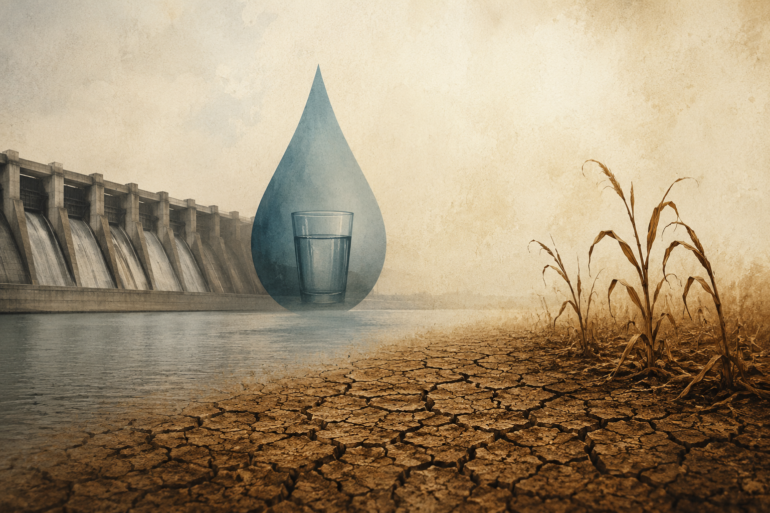
With water levels in the Tungabhadra Dam continuing to decline, authorities have decided to prioritize the remaining water exclusively for drinking purposes. The move comes amid concerns over inadequate inflows and the need to ensure an uninterrupted drinking water supply for lakhs of people dependent on the reservoir. The decision means that no further water will be released for irrigation until there is a significant improvement in storage levels.
Officials have urged farmers in the command areas to avoid taking up water-intensive crops and instead opt for alternatives that require less water. The Tungabhadra Reservoir is a crucial lifeline for the districts of Ballari, Vijayanagara, Koppal and Raichur in Karnataka, while also supporting irrigation and drinking water needs in parts of Andhra Pradesh and Telangana. During years of poor rainfall, balancing agricultural requirements with drinking water demands becomes a major challenge.
According to officials, safeguarding drinking water has become the top priority as the available storage must last until the arrival of the next monsoon. Water management authorities are closely monitoring reservoir levels and future inflows before taking any further decisions regarding irrigation releases.
Agriculture experts have advised farmers to carefully plan cultivation based on the available water resources. They also emphasized the importance of adopting efficient irrigation methods and selecting crops that can withstand limited water availability.

The latest decision is expected to affect thousands of farmers across the Tungabhadra command area who were hoping for additional irrigation releases. However, officials maintain that ensuring safe drinking water for towns and villages dependent on the reservoir must take precedence during periods of water scarcity.
The Tungabhadra Dam remains one of South India’s most important multipurpose reservoirs, providing drinking water, irrigation, hydroelectric power and industrial water supply. Its management plays a vital role in the economy and livelihoods of millions of people across Karnataka, Andhra Pradesh and Telangana.