
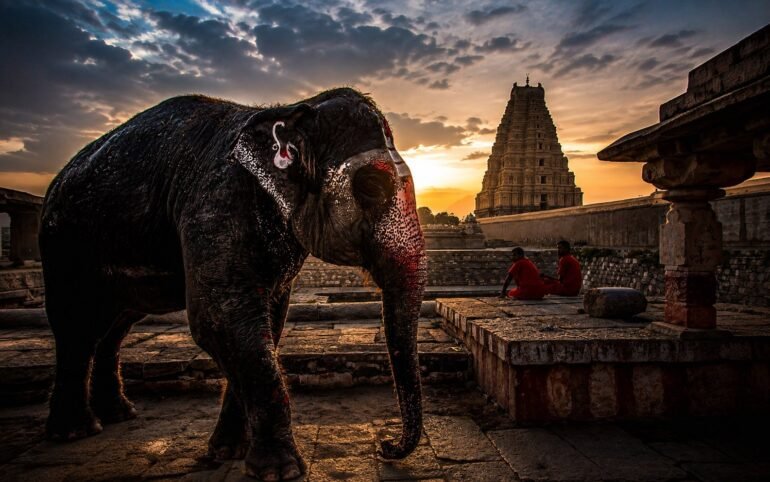
In the ancient ruins of Hampi, where history whispers through stone temples and tourists gather from across the world, one resident has long stood out among the crowds — Lakshmi, the beloved temple elephant of the Virupaksha Temple. This week, emotions overflowed across the heritage town after authorities decided to shift Lakshmi to a rehabilitation and treatment facility in Kolar district. What began as an administrative move quickly turned into an emotional public issue, revealing just how deeply connected the elephant is to the identity of Hampi.
For decades, Lakshmi has been more than just a temple elephant. She has become part of the spiritual and cultural landscape of the UNESCO World Heritage site. Visitors often stop to receive her blessings, pose for photographs, and interact with her near the temple premises. For many locals, seeing Lakshmi every day had become a part of life itself. However, officials from the Forest Department stated that the 36-year-old elephant has been facing age-related health complications and recurring injuries. According to authorities, specialised medical attention and rehabilitation were necessary for her well-being, prompting the decision to move her to a care facility equipped to handle elephant treatment and recovery.
The announcement triggered strong reactions in Hampi. Hundreds of residents, devotees, traders, guides, and tourism workers gathered in protest, opposing the relocation. Many feared that Lakshmi’s absence would leave an emotional void in the town and affect the unique atmosphere that draws thousands of visitors every year. The most heartbreaking moment came from Lakshmi’s longtime mahout, who reportedly broke down emotionally while pleading with officials not to separate the elephant from the place she has called home for years. Videos and images from the protest spread rapidly on social media, further intensifying public sentiment.
Police personnel were deployed in the area as tensions rose. Protesters demanded assurances that Lakshmi would not be permanently removed from Hampi. Later, district officials clarified that the elephant would return after receiving treatment and proper care, helping ease public concerns. Beyond the protests, the incident has sparked a wider conversation across Karnataka and social media platforms about elephant welfare and the role of temple elephants in modern society. While many argue that Lakshmi deserves the best medical care possible, others question whether elephants should continue to live in temple environments at all.

The debate reflects a larger conflict between tradition and animal welfare — one that India has increasingly been forced to confront in recent years. Yet amid the arguments and emotions, one fact remains undeniable: Lakshmi is not merely an attraction in Hampi. To many, she is family, tradition, memory, and emotion wrapped into one gentle giant. And as the people of Hampi wait for her return, the silence around Virupaksha Temple feels heavier than usual. The elephant is expected to receive specialised medical care and monitoring at the elephant rehabilitation and treatment facility in Kolar district, and authorities have assured that she will be brought back to Hampi after completion of her treatment.