
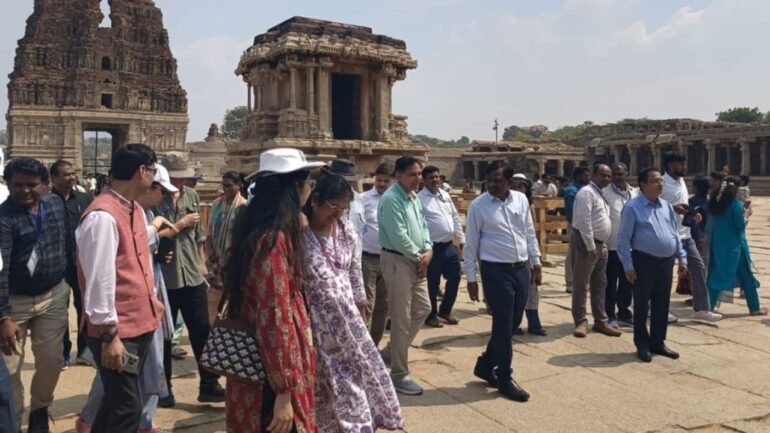
A six-member UNESCO expert team conducted a comprehensive inspection of the Virupakshashwara Temple and other historic monuments in Hampi on Monday morning. The delegation assessed the condition of heritage structures, visitor amenities, crowd management protocols, and the ancient irrigation infrastructure established during the Vijayanagara Empire. Temple authorities organized a special pooja for the visitors, presenting the team leader with a traditional shawl, a flower garland, and fruit prasada as a gesture of honor.
Following prayers at the main Virupakshashwara shrine, the experts visited the Pampadevi and Bhuvaneshwari temples. Local officials provided briefings on the historical significance of the presiding deities and the origins of the Rajagopuram and other temple towers. The team reviewed existing crowd management strategies and discussed potential improvements to facilities for devotees and tourists. The inspection then moved to the Eduru Basavanna Mantapa, where experts examined the Basavanna idol and the double-storeyed Salu Mantapas flanking the temple. Officials noted that these pavilions once served as commercial hubs during the Vijayanagara period, and modern shops have been removed from the area to preserve the historic layout. The team also climbed the steps behind the mantapa towards Achyutaraya Bazaar to observe the Virupakshashwara Bazaar.
The delegation proceeded to Sri Krishna Bazaar to inspect the pavilions before the Krishna Temple and the Bala Krishna Temple. Experts documented the gradual deterioration of brick figures on the gopuram caused by rain exposure using mobile phones. Although the main idol is no longer present, the team entered the dark garbhagudi of the Bala Krishna Temple, using phone flashlights to examine the interior. The experts commended the Archaeological Survey of India (ASI) staff for their daily maintenance efforts and posed for photographs with the ground team.
The tour continued with a distant view of the Ugra Narasimha and Badavilinga mantapas before the team inspected new hotels and toilet blocks built by the Tourism Department in the main parking area. They also examined a newly laid road and the historic Hiriya Chatra, or old choultry, along the route. At the Mahanavami Dibba, the experts spent approximately an hour inspecting the stone doors at the base and gathering historical data. They climbed to the summit to capture panoramic views of the landscape. The team also closely examined the network of stone canals that comprised the Vijayanagara-era irrigation system. After a lunch break, the delegation held a detailed meeting with officials to discuss their observations.
The six-member team included UNESCO international heritage expert George Abungu from Kenya, Ichita Shimoda from Japan, and ASI Additional Director General Janhwij Sharma. The visit was accompanied by Hosapete Deputy Commissioner Kavitha S. Mannikeri and officials from various other departments.