
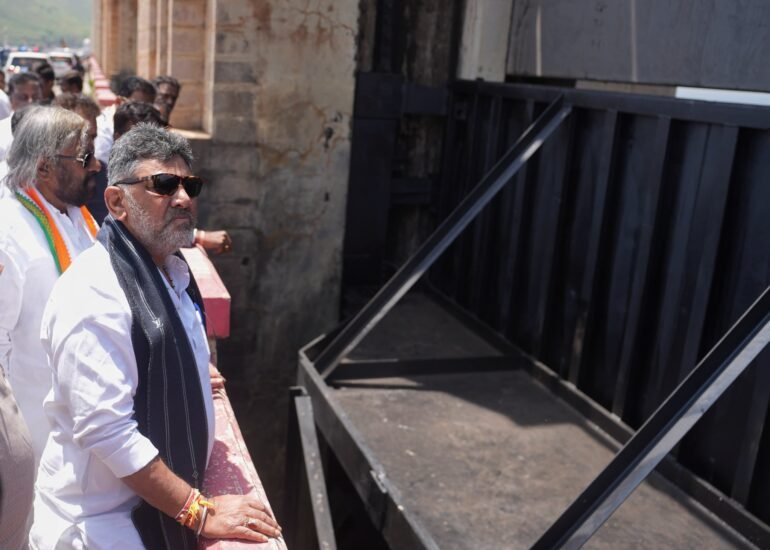
The long-pending demand to increase the height of the Tungabhadra Dam has now been ruled out, with Karnataka Deputy Chief Minister D. K. Shivakumar clearly stating that such a move is not possible. The government has instead decided to focus on practical and immediate improvements to the dam’s existing infrastructure. Increasing the height of the dam involves multiple challenges, including structural limitations, safety concerns, and complexities related to interstate water-sharing agreements. Considering these factors, authorities have chosen not to pursue this option and are prioritizing safer and more feasible alternatives.
The primary focus is now on the installation and replacement of crest gates. A total of 33 crest gates are being upgraded to ensure the dam can function at its full intended capacity. These gates are crucial for controlling water levels, and their modernization will help prevent issues such as leakage or unnecessary release of water.
This upgrade is expected to significantly benefit farmers who depend on the Tungabhadra reservoir for irrigation. With improved storage efficiency, the dam will be able to supply water more reliably across regions in Karnataka as well as neighboring states like Andhra Pradesh and Telangana, especially during periods of low rainfall.
The work on the crest gates is nearing completion and is expected to be finished before the monsoon season. This ensures that the dam will be ready to store incoming water efficiently, maximizing its utility.

Overall, the government’s decision reflects a shift toward modernization rather than expansion. By upgrading existing systems instead of increasing the dam’s height, authorities aim to ensure safety, improve performance, and deliver quicker benefits to the agricultural sector.