
In Koppal, thousands of fish have died in the Tungabhadra River due to drastically reduced water flow caused by deficient rainfall, raising concerns over the deteriorating river ecosystem in parts of the district. The riverbed has nearly dried up, leaving behind scattered pools of stagnant and muddy water. Dead fish were found strewn along the riverbank, while exposed rocks and dried algae dominated the landscape during what is usually the peak monsoon season. With water levels falling sharply, fish are struggling to survive in the remaining polluted pools. Environmentalists and villagers said a combination of rising temperatures and depleted oxygen levels in the water caused the fish to suffocate and wash ashore. The rotting fish have spread a foul odour across the area, triggering fears of disease outbreaks among residents of nearby villages. Hundreds of crows and other birds have flocked to the river to feed on the carcasses, highlighting the ecological damage caused by the drying river. Villagers and environmental activists criticised the authorities for failing to maintain a minimum flow in the river from the Tungabhadra reservoir. They warned that unless water is released immediately, the region could face a drinking water crisis in the coming days. Vishnutirtha Joshi, local convener of the Save Tungabhadra (ಸೇವೆ ತುಂಗಭದ್ರ) campaign, urged the authorities to release water from the Tungabhadra reservoir and ensure a minimum flow in the river during the monsoon season.
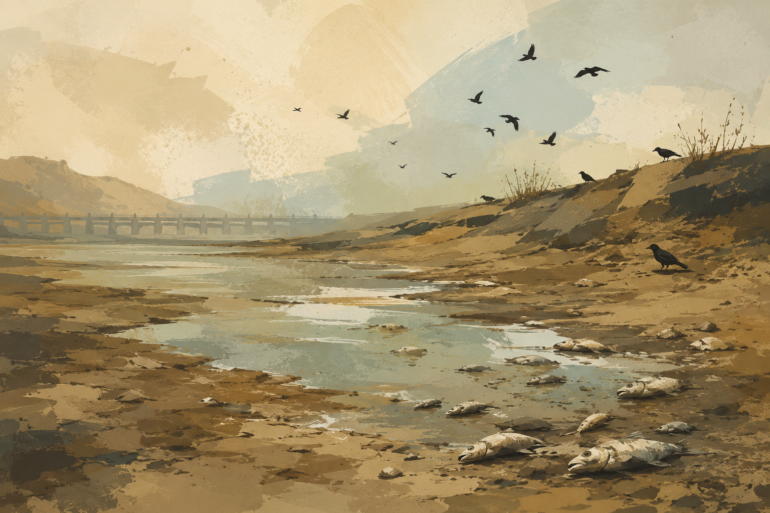
Thousands of Fish Die as Tungabhadra River Dries Up in Koppal