
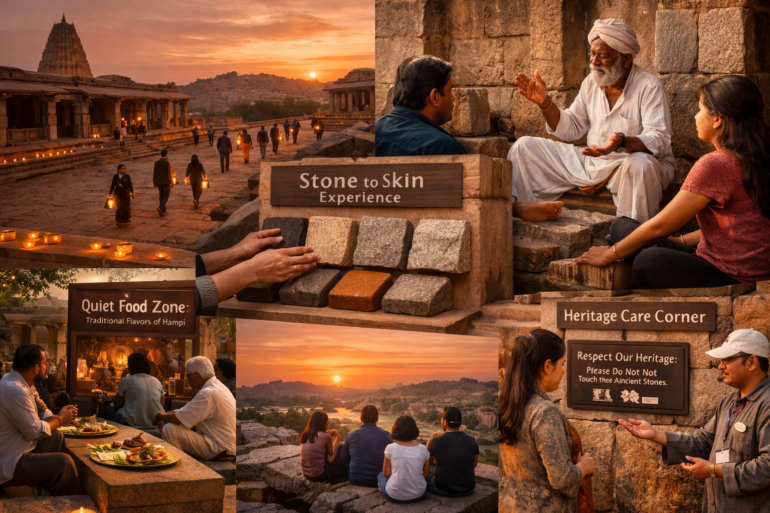
Hampi Utsav has immense potential. Set amidst a UNESCO World Heritage landscape, it attracts visitors from across Karnataka and beyond. Yet, despite its scale and cultural importance, many visitors leave with mixed feelings. Overcrowding, unclear instructions, overlapping sounds, rushed schedules, and a lack of emotional connection to the monuments often dilute the experience. Instead of feeling immersed in history, visitors sometimes feel overwhelmed.
This article outlines a set of carefully designed ideas that focus on calm, clarity, and connection. These are not grand spectacles or expensive additions. They are experience-driven improvements that can make Hampi Utsav more meaningful, respectful, and memorable.
Silent Heritage Hours
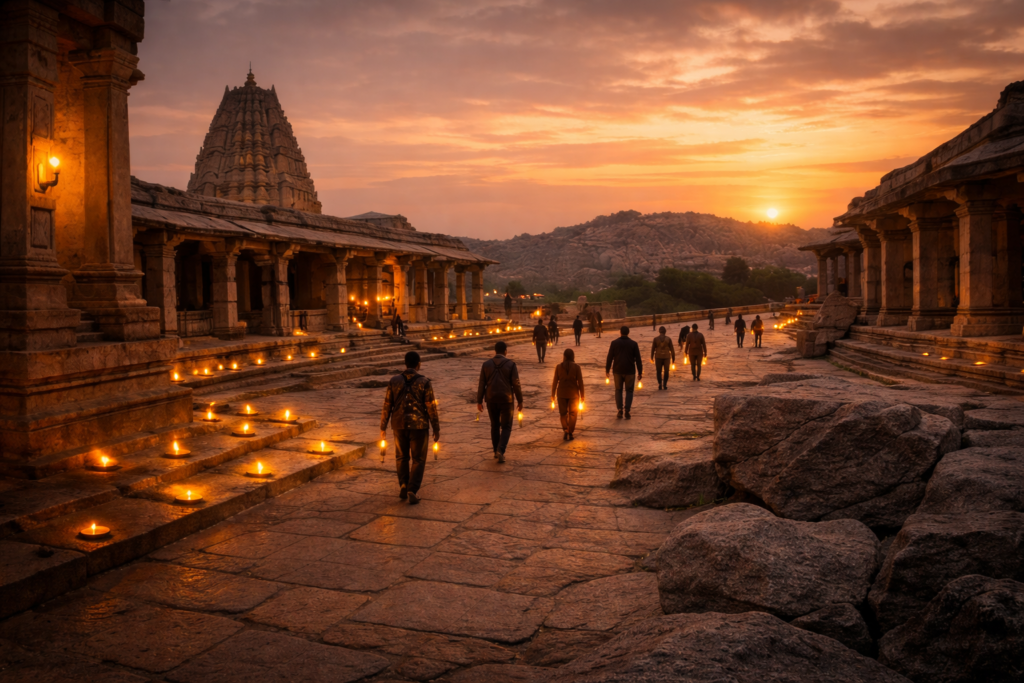
One of the biggest issues at heritage festivals is noise. Constant announcements, music from multiple stages, and crowd chatter make it hard to truly experience historic spaces.
Silent Heritage Hours introduce a fixed time period where no amplified sound is allowed in select zones. Visitors explore monuments in near silence, guided by subtle lighting and optional audio through QR codes. This allows people to absorb the scale, acoustics, and atmosphere of Hampi as it was meant to be experienced.
Silence becomes the experience, not an absence of activity.
One Ruin, One Story Concept
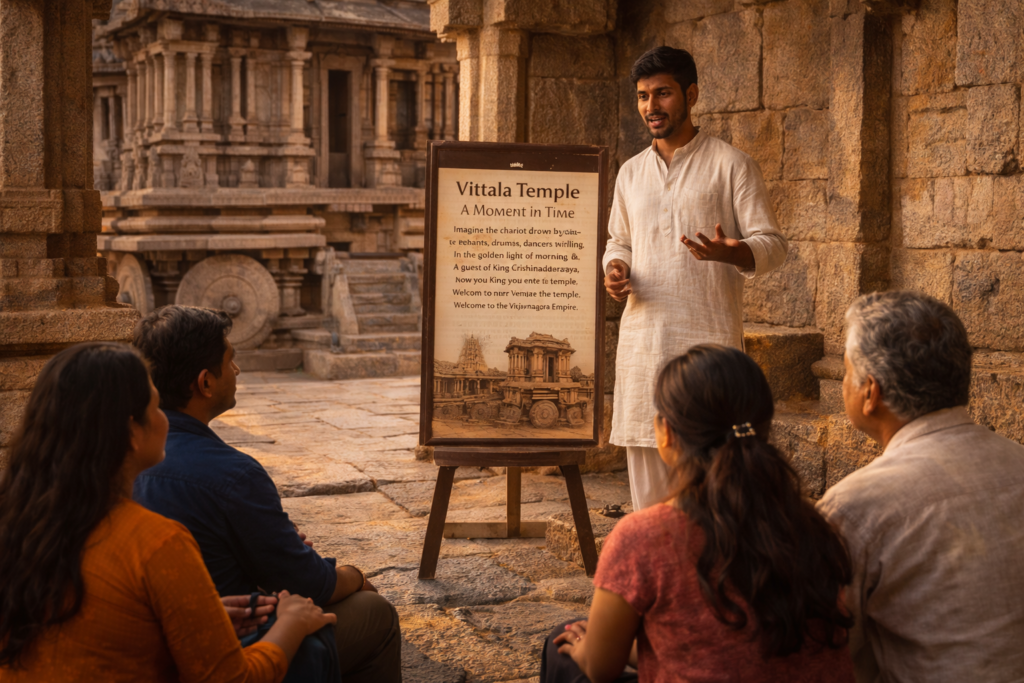
Visitors often see dozens of ruins but remember very little about them. Information boards are either too technical or too generic.
Under this concept, each monument or ruin focuses on just one powerful story. It could be about daily life, craftsmanship, a forgotten ritual, or a human moment from the Vijayanagara era. Local students, artists, or historians curate this story using minimal text, visuals, or live narration.
This approach reduces information overload and increases emotional recall.
Stone to Skin Experience Booth
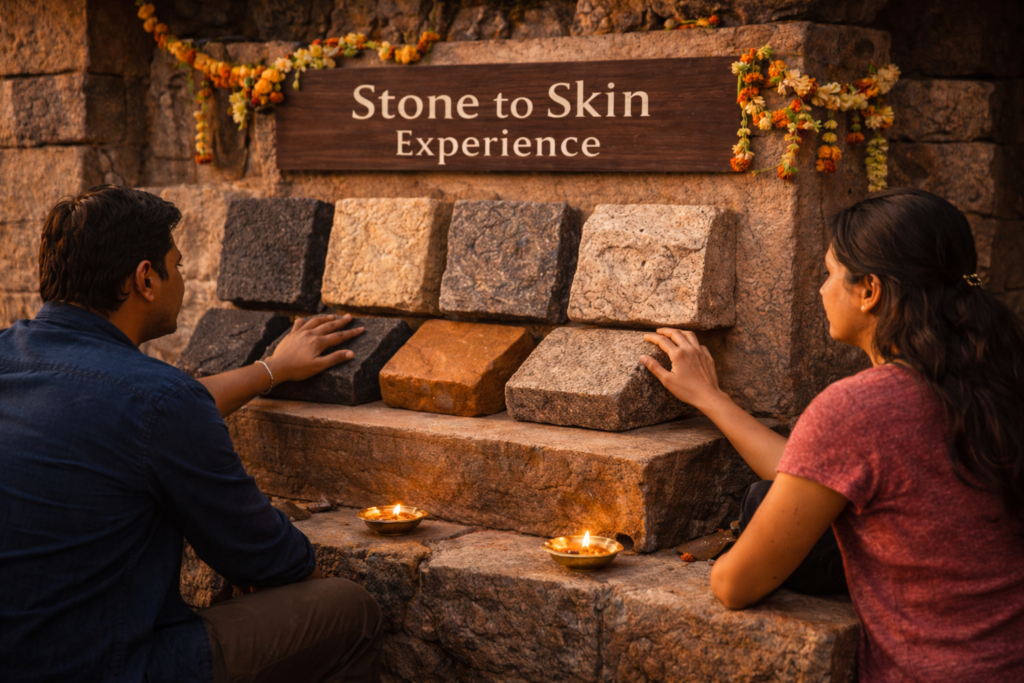
Heritage is usually seen, rarely understood through touch.
The Stone to Skin Experience Booth is designed only with curated stone samples, not actual monument surfaces. These samples represent the types of stone used in Hampi’s architecture and are placed specifically for safe, guided interaction.
Visitors can touch these samples to understand texture, hardness, weathering, and why different stones were chosen centuries ago. The experience also explains how repeated human touch damages original structures, helping visitors clearly distinguish between what can be touched and what must be protected.
By offering a controlled tactile experience, the booth reduces confusion, builds awareness, and actively discourages people from touching the real monuments.
Quiet Food Zones
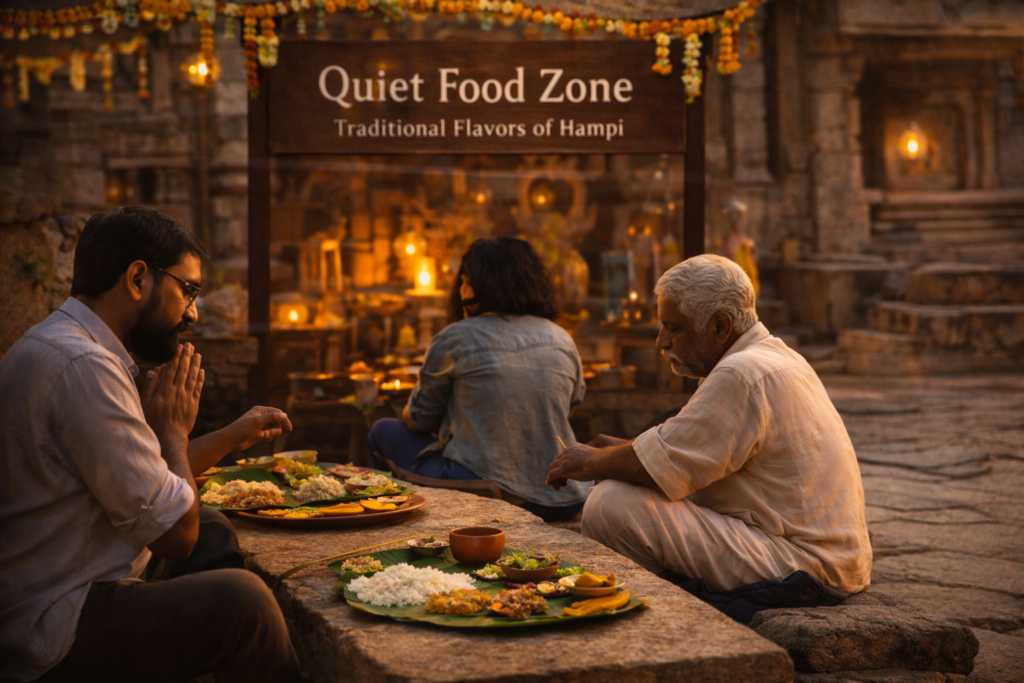
Food courts are often the noisiest and most chaotic areas of festivals. At Hampi Utsav, this noise spills into heritage spaces.
Quiet Food Zones solve this by separating food from performance. No loud music, no shouting vendors. Food is served in calm spaces with simple descriptions of traditional dishes, their origins, and cultural context.
Eating becomes a reflective pause rather than a rushed break.
Sunset Pause Announcement

Instead of scheduling another performance at sunset, a gentle announcement invites everyone to pause.
For two minutes, movement slows. People are encouraged to stand still, sit, or simply watch the sun set over the ruins. No commentary follows. The moment belongs to the visitor.
This shared pause creates a collective memory that no stage show can replace.
Soft Exit Experience
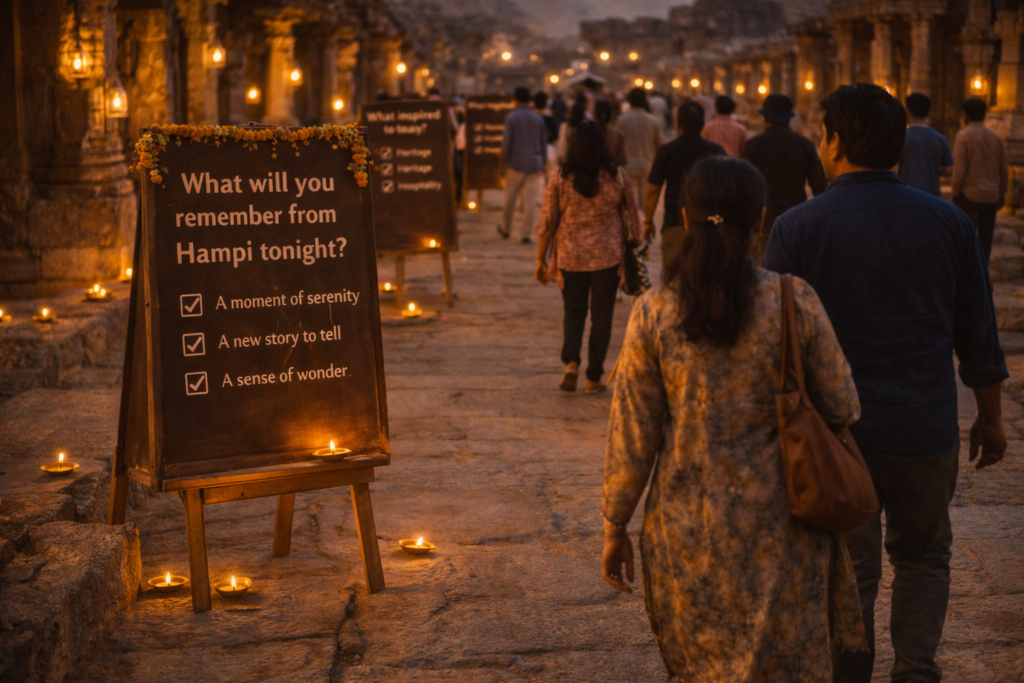
Festivals often end abruptly, pushing visitors out through dark, crowded exits.
A Soft Exit Experience changes this by designing the exit as part of the journey. Subtle lighting, slow instrumental sounds, and reflective prompts help visitors transition out calmly. Simple boards ask questions like, “What will you remember from Hampi tonight?”
Visitors leave with a sense of completion, not exhaustion.
Elder Story Hours or Stages
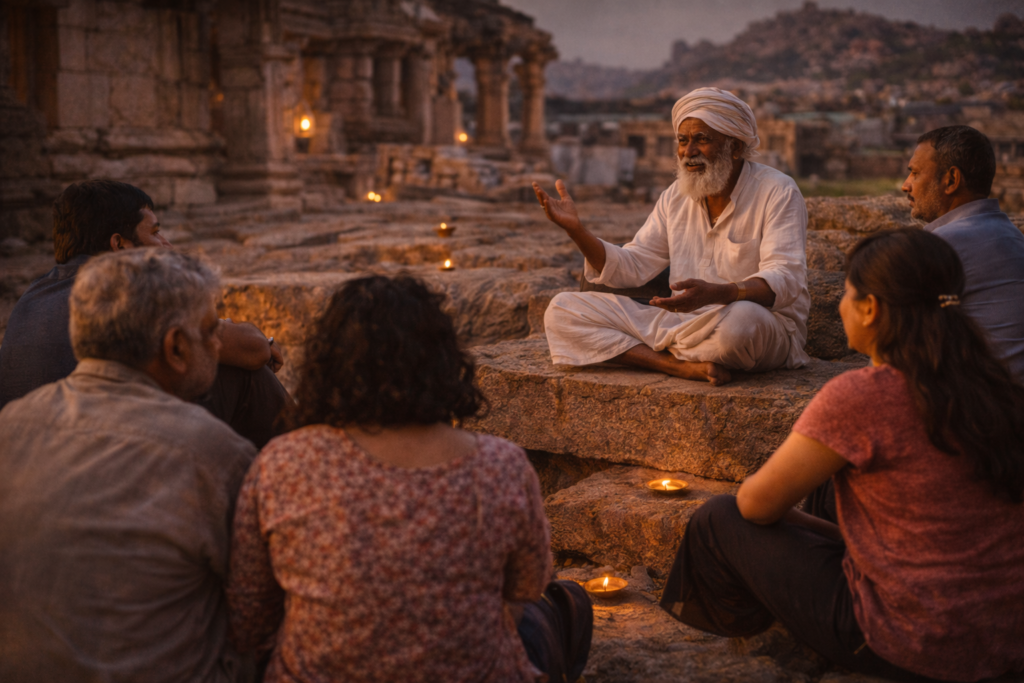
Local elders hold stories that never appear in guidebooks. Their memories of festivals, floods, daily life, and changing landscapes add a deeply human layer to Hampi’s history.
Elder Story Hours are informal sessions with no stage glamour, no microphones unless necessary, and small listening circles. These stories ground the festival in lived experience and give voice to the community that protects Hampi year-round.

Heritage Care Corners
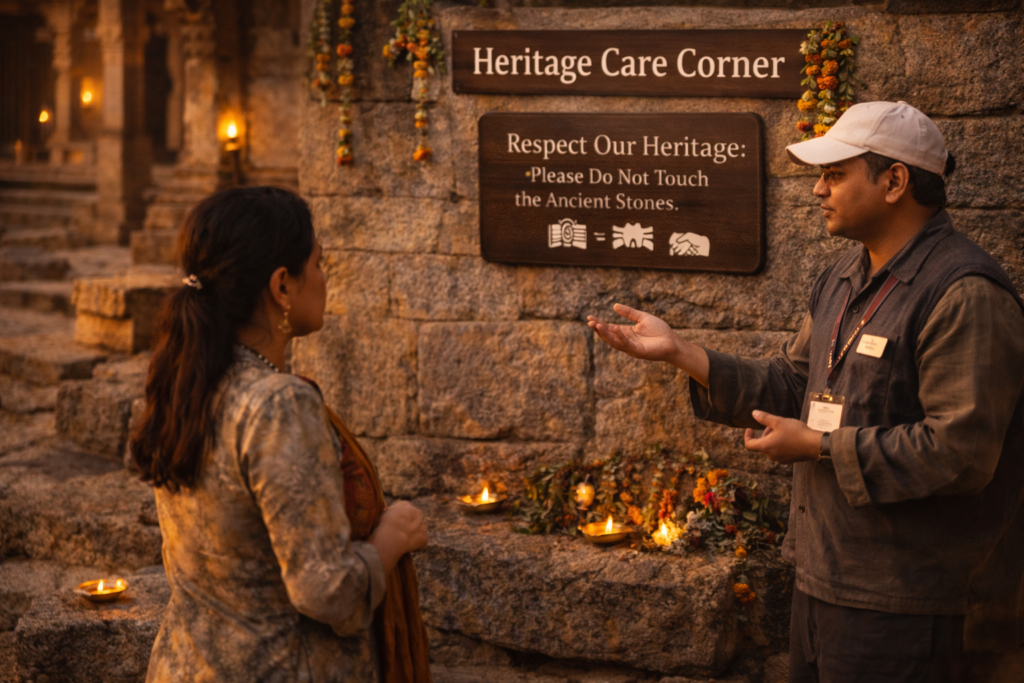
Many visitors damage monuments unintentionally, simply because they do not know better.
Heritage Care Corners quietly educate visitors on how to behave responsibly. Instead of warnings, they explain why certain actions harm stone, where it is safe to touch, and how preservation works.
Education replaces enforcement.
No Competing Sounds Rule
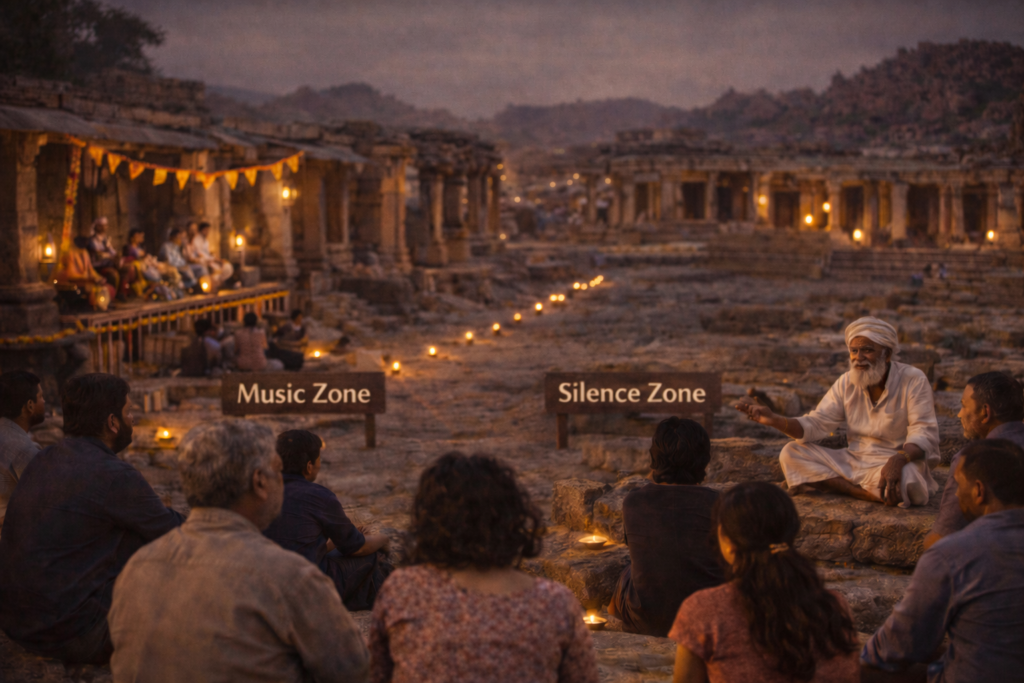
One of the most disruptive problems at Hampi Utsav is overlapping sound from multiple directions.
The No Competing Sounds Rule ensures that sound-based experiences are placed far enough apart so they do not interfere with each other. Silence zones are protected, storytelling areas remain audible, and music does not overpower heritage spaces.
This single rule dramatically improves visitor comfort.
Event Ending Is Not a Peak
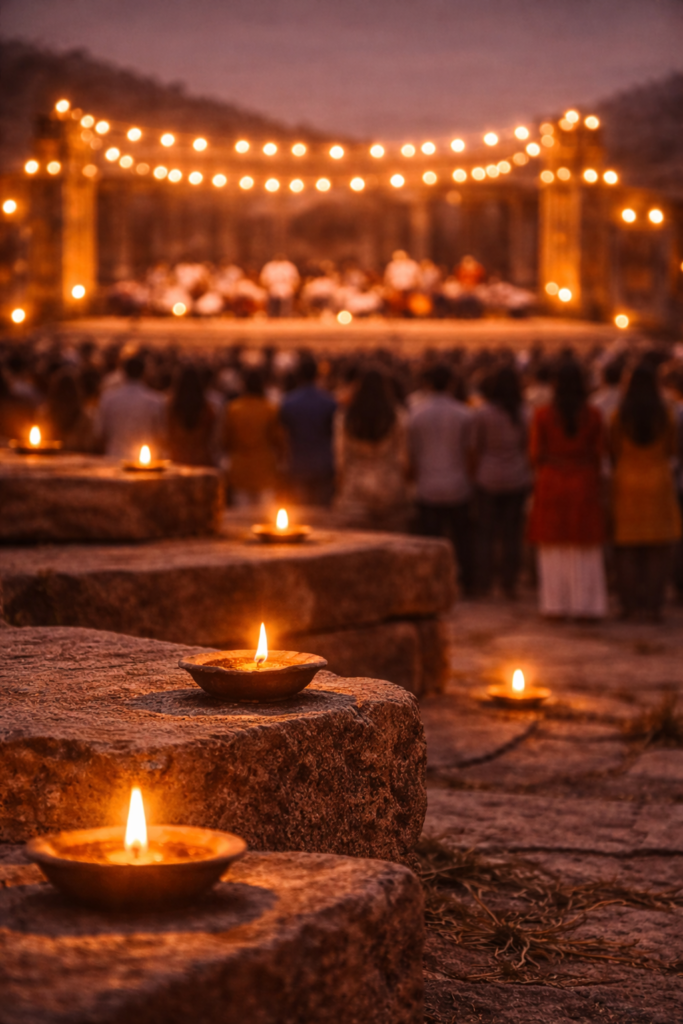
Most festivals save their loudest performances for the end. At a heritage site, this creates chaos, crowding, and fatigue.
At Hampi Utsav, the final hour should be the calmest. Fewer activities, lower lighting, and quieter experiences allow visitors to absorb what they have seen. The festival fades gently instead of ending abruptly.
This respects both the site and the visitor.
A Better Hampi Utsav Is About Thoughtful Design
Improving Hampi Utsav does not require bigger stages or bigger crowds. It requires better flow, quieter moments, clearer stories, and deeper respect for the site.
By focusing on silence, simplicity, and human connection, Hampi Utsav can evolve into an experience that visitors remember not for its noise, but for its meaning.