
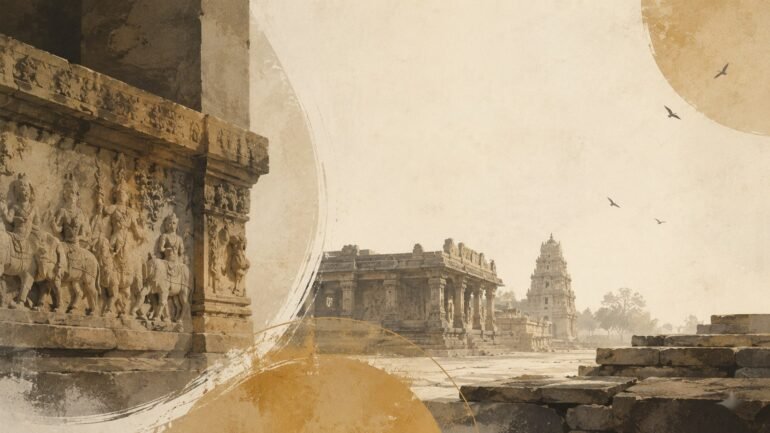
The Archaeological Survey of India (ASI) has started a ₹56 lakh conservation project at the historic Hazara Rama Temple in Hampi, aiming to preserve one of the finest architectural treasures of the Vijayanagara Empire. The restoration work mainly focuses on repairing damaged stone flooring and strengthening parts of the temple complex that have deteriorated over time due to weathering and continuous tourist movement.
The conservation initiative reportedly gained attention after Union Culture Minister Gajendra Singh Shekhawat visited Hampi and instructed authorities to take up restoration measures to protect the monument. The work is expected to be completed within the next few months.
What makes this project especially significant is ASI’s use of traditional Vijayanagara-era construction techniques instead of modern cement-based restoration methods. Materials such as lime, river sand, jaggery, gallnut, bael fruit, and river pebbles are being used in the process to maintain the temple’s authenticity and historical character.
The Hazara Rama Temple holds immense historical and cultural importance as it is believed to have served as the private temple of the Vijayanagara royal family during the reign of King Devaraya I in the early 15th century. Unlike many other temples in Hampi that were built for public worship, this temple had close royal connections and played an important role within the royal enclosure of the empire.
The temple is renowned for its breathtaking stone carvings that depict scenes from the Ramayana in extraordinary detail. The name “Hazara” is associated with the countless carvings and panels spread across the temple walls, narrating episodes from the life of Lord Rama. These sculptures are considered among the finest examples of narrative art in Indian temple architecture.
Apart from the Ramayana carvings, the temple is also famous for its detailed depictions of royal processions, elephants, horses, soldiers, dancers, and ceremonial celebrations that offer a glimpse into the grandeur and lifestyle of the Vijayanagara Empire. Historians and archaeologists consider these carvings valuable records of South Indian history and culture.

Though smaller in size compared to some of Hampi’s larger temples, the Hazara Rama Temple is admired for its elegant layout, beautifully sculpted pillars, and refined craftsmanship. Its architectural precision and artistic excellence make it one of the most treasured monuments within the UNESCO World Heritage Site of Hampi.
The ongoing conservation work is expected to help preserve this historic masterpiece for future generations while reinforcing the importance of protecting India’s rich cultural heritage through traditional and sustainable restoration practices.