
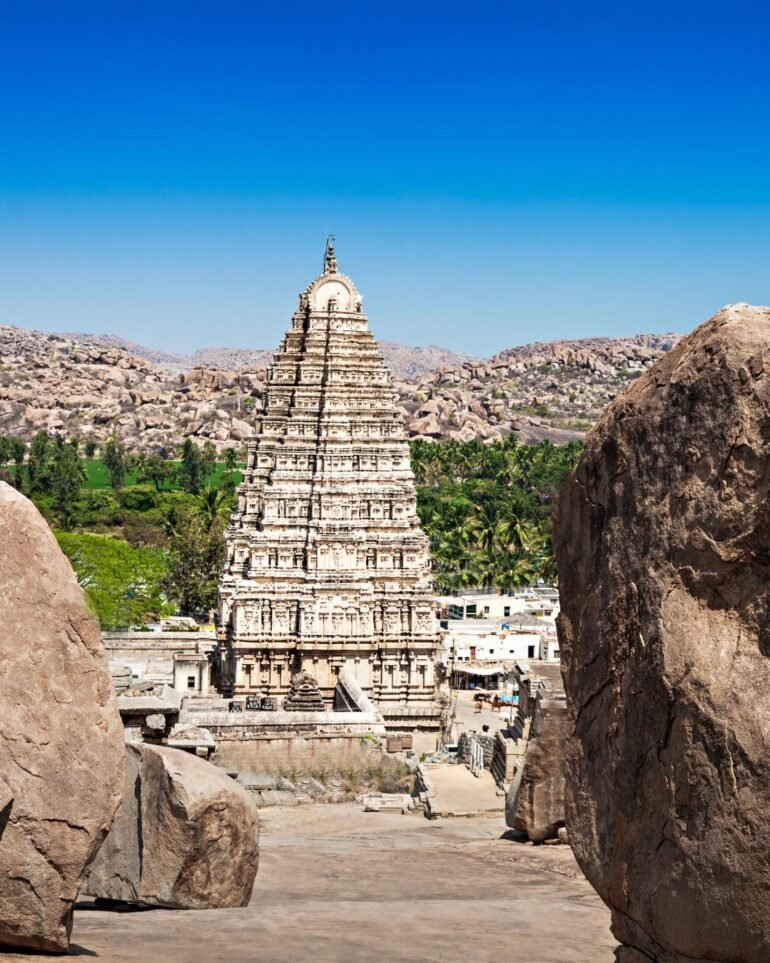
A team from the International Council on Monuments and Sites is set to visit Hampi after a gap of nearly 25 years.
The UNESCO World Heritage Committee is expected to arrive in the second week of April to review the conservation status of monuments belonging to the Vijayanagara Empire.
According to a senior official, the reactive monitoring mission is being planned following complaints about poor monument management and concerns over possible threats from ongoing development works.
Hampi receives one of the largest tourist footfalls in the state. However, it has recently drawn negative attention due to incidents such as vandalism of monuments, the collapse of a section of the Saalu Mantapa, the gangrape of a foreign woman tourist and a local homestay owner, and the murder of a male tourist from Odisha.
The visiting delegation from the International Council on Monuments and Sites will mark the first such inspection in 25 years.
Earlier, in 2001, an international committee had intervened to stop the construction of a bridge near the Virupaksha Temple on the banks of the Tungabhadra River.
During the April visit, the team of international experts is expected to inspect all protected monuments located in the core and buffer zones of the heritage site and evaluate potential risks to these structures.
A highly placed source said that if the committee finds any serious threat to the survival of the historic monuments, it may issue a notice seeking details of the measures the state plans to take to safeguard their outstanding universal value. If the authorities — including the state government and the Archaeological Survey of India — fail to present a satisfactory action plan, UNESCO may consider placing Hampi on the endangered heritage list.
There are more than 1,250 historical sites within the World Heritage area, including 57 monuments protected by the central government.
While the state government is responsible for conserving and restoring the remaining monuments, locals claim several sites have already been damaged or have lost their original character due to neglect.
Krishna Devaraya, a descendant of the Vijayanagara dynasty, said the UNESCO recognition has helped restrict construction activities in the core zone, which has played a role in protecting the heritage landscape.
However, he pointed out that several illegal resorts and unauthorised structures have emerged in and around Hampi.
According to him, these must be identified and removed to preserve the sanctity and authenticity of the region. He also warned that illegal stone quarrying poses a significant threat to Hampi’s heritage.
He stressed the need for implementing comprehensive master plan guidelines and empowering local communities to promote sustainable tourism. Strict action should be taken against those violating regulations or engaging in illegal activities. He also suggested improving public infrastructure for visitors, including clean restrooms and drinking water facilities.

Ramesh Vatgal, commissioner of the Hampi World Heritage Area Management Authority, said financial limitations remain a major challenge in conserving and protecting monuments.
He said issues such as solid waste management, drinking water, cleanliness and visitor security need urgent attention. A proposal will be submitted to the state government for installing CCTV cameras and creating a centralised monitoring system to improve protection.
Vatgal added that during the previous visit, the UNESCO team had offered several recommendations to enhance visitor experience at Hampi, but many of them have not yet been implemented.
Meanwhile, Thrilok Chandra K V, secretary of the Karnataka Tourism Department, said the exact dates for the UNESCO team’s visit are yet to be finalised.
He said the team is expected to provide recommendations which the government will implement. He added that several steps have already been taken to improve tourist facilities, including the removal of unauthorised homestays and resorts in the core and buffer zones.
He also said the swift verdict in the gangrape and murder cases in Sanapur has sent a strong message, and the death penalty could serve as a deterrent.